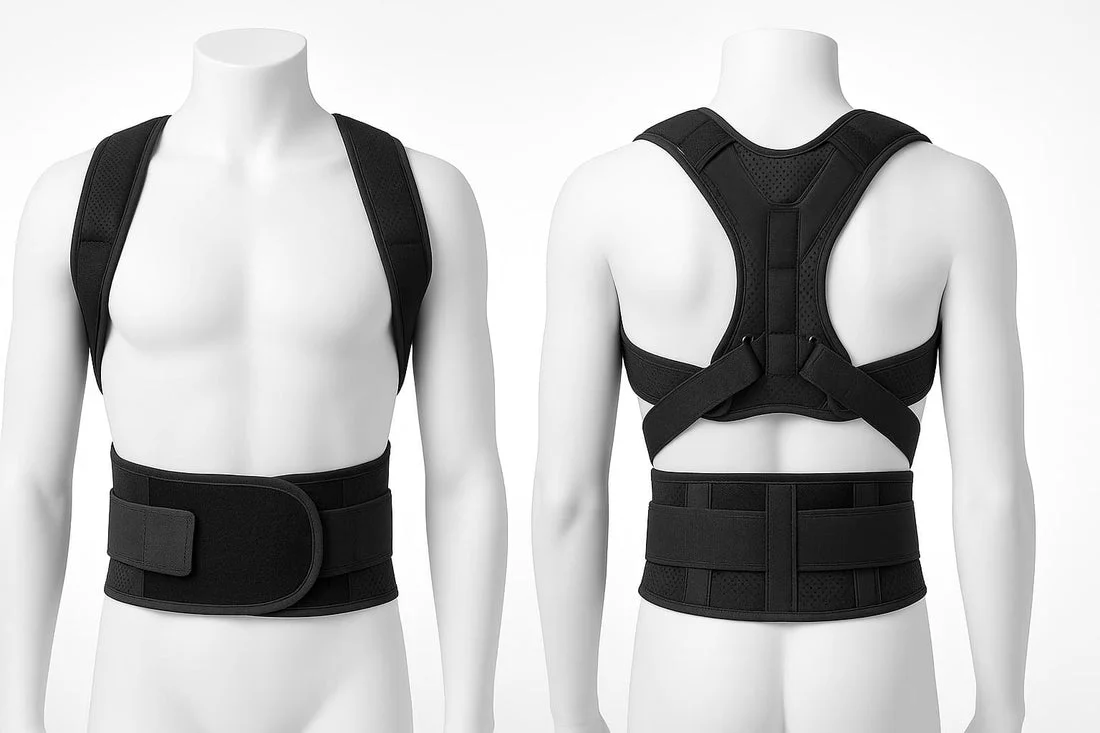
How to choose a posture corrector for real office days
For the active product shortlist, start with LeStallion’s 5 Best Posture Correctors for Office Workers review, then use this support guide to judge comfort, support level, sizing, discreet wear, care routine, and ergonomic context.
Comfort First. A posture corrector for office work should feel like a reminder, not a punishment. If it pinches, rubs, or restricts breathing, it will not stay in the routine. For posture corrector research, the useful test is whether the corrector supports awareness without disrupting normal desk work.
Comfort First check. Picture a full email block, meeting, and lunch break; the support should remain tolerable through ordinary office movement.
Support Level. More pull is not always better. Gentle support can remind shoulders and upper back without forcing a rigid position that causes fatigue. For posture corrector research, the useful test is whether the corrector supports awareness without disrupting normal desk work.
Support Level check. Look for adjustability that lets the user start lightly and change tension as awareness improves.
Desk Ergonomics. A corrector cannot fix a poor desk setup by itself. Monitor height, chair position, keyboard reach, and break habits still matter. For posture corrector research, the useful test is whether the corrector supports awareness without disrupting normal desk work.
Desk Ergonomics check. Use the brace as one part of the setup, alongside screen height, chair support, and regular movement.
Discreet Wear. Office workers may prefer a corrector that fits under shirts, sweaters, or light jackets without bulky straps showing everywhere. For posture corrector research, the useful test is whether the corrector supports awareness without disrupting normal desk work.
Discreet Wear check. Check strap shape, material thickness, and whether the device works with normal work clothing.
Sizing. Sizing errors can make a useful design feel useless. Too small can pinch; too large can slide or fail to remind posture. For posture corrector research, the useful test is whether the corrector supports awareness without disrupting normal desk work.
Sizing check. Measure carefully and read size ranges before choosing a brace for daily work.
Care Routine. Anything worn near the body needs simple cleaning. Sweat, lotion, dust, and fabric contact can affect comfort over time. For posture corrector research, the useful test is whether the corrector supports awareness without disrupting normal desk work.
Care Routine check. Choose materials that can be cleaned and dried without turning maintenance into a weekly chore.
Workday rehearsal. Imagine a normal office day: logging in, leaning toward a screen, joining a call, walking to a printer, carrying a laptop, and sitting through an afternoon meeting. A good posture corrector should remind the body during those moments without making the worker feel trapped or self-conscious.
Reminder not cure. Posture correctors are best treated as awareness tools. They can encourage the shoulders and upper back to notice slouching, but they do not replace strengthening, stretching, movement breaks, or medical guidance for pain. The buying decision should stay practical and modest.
Chair and monitor context. If a monitor is too low or the chair is unsupportive, a brace may feel like it is fighting the desk. Raise the screen, bring the keyboard closer, and set feet comfortably before judging the corrector. Office posture is a system, not a single strap.
Break timing. Many office workers benefit from using support for short periods rather than all day immediately. Starting with focused work blocks can help the user notice posture without overdoing tension. A gradual routine is often easier to keep than a strict full-day plan.
Material feel. Breathable fabric, smooth edges, and low-profile straps matter during long sitting. Rough seams or hot materials become distracting quickly. Material comfort is especially important for people who wear the corrector under work shirts or during warm commutes.
Meeting confidence. A corrector that looks bulky or squeaks under clothing may stay in a drawer during important meetings. Discreet shape and quiet movement can matter as much as support strength for office workers who need to feel comfortable around colleagues or clients.
Movement compatibility. Office work includes more than sitting. Reaching for files, standing at a whiteboard, commuting, and walking between rooms all test whether a brace shifts. The corrector should allow normal movement while still giving enough feedback to be useful.
Adjustment habits. Easy adjustment matters because tension may need to change through the day. Morning comfort, afternoon fatigue, and different clothing layers can all affect fit. A corrector that adjusts quickly is more likely to stay in use.
Body-awareness language. The most useful posture reminder is gentle and specific: relax the shoulders, lengthen the neck, support the lower back, and bring the screen up. A brace should encourage those habits rather than making the user chase a stiff, unnatural pose.
When to stop. If a corrector causes numbness, sharp pain, skin irritation, or breathing restriction, it should be removed and reconsidered. Office comfort tools should reduce friction, not create warning signs. Practical buying advice includes knowing when a product is not the right fit.
Shared advice caution. Posture needs vary widely. A model that helps one coworker may not fit another body, chair, or clothing style. Teams should avoid one-size-fits-all assumptions and compare sizing, adjustability, and comfort instead.
Seven-day desk check. A useful test is the first week: does the corrector get used during real work, does it remind posture without frustration, does it clean easily, and does the desk setup feel more intentional? If the answer is no, adjust the routine before buying extras.
Buying signals worth trusting. Trust practical signals over dramatic claims: clear sizing, breathable materials, easy adjustment, realistic usage guidance, and transparent care instructions. Be cautious with promises that imply a brace alone will solve posture, pain, energy, or productivity.
Long-term fit. The best corrector is the one that supports a habit the worker can keep. It should pair with breaks, ergonomic changes, and awareness rather than demand constant dependence. Long-term value comes from comfort, gentle feedback, and consistency.
Final buying lens. Before choosing, walk through the whole path from measuring to wearing to adjusting to cleaning. If those steps feel simple, the posture corrector is more likely to become a useful office reminder instead of another unused accessory.
Commute and storage. Many office workers carry comfort tools in a bag, desk drawer, or locker. A posture corrector should pack without twisting straps into a confusing knot, and it should be easy to put on without turning the start of the workday into a private dressing-room problem.
Skin and layer check. The same brace can feel different over a T-shirt, dress shirt, blouse, sweater, or base layer. Seams, buckles, and edges should not scrape during typing or reach forward. Trying the fit over realistic work layers is more useful than judging it over gym clothing.
Laptop posture reality. Laptop work often pulls the head and shoulders forward. A posture corrector can remind the upper body, but a laptop stand, external keyboard, and better screen height may do more for the whole setup. Compare the brace alongside the actual laptop arrangement.
Afternoon fatigue. Posture often gets worse late in the day when attention drops. A useful corrector should still feel gentle enough during that slump. If it creates irritation by afternoon, the worker may remove it exactly when a reminder would be helpful.
Manager and team guidance. If an office recommends posture tools, the message should stay flexible and respectful. People have different bodies, health histories, and comfort thresholds. Provide options, encourage breaks, and avoid treating a brace as a mandatory fix for every worker.
Return policy importance. Fit-sensitive products can be hard to judge from photos. A clear return policy or size exchange can matter because strap angles, torso length, shoulder width, and clothing all affect comfort. Practical value includes the ability to correct a sizing mistake.
Fit, Comfort, and All-Day Office Wear
Fit, Comfort, and All-Day Office Wear gives one focused way to compare a posture corrector before adding it to a real office routine.
Support Level and Posture Reminders
Support Level and Posture Reminders gives one focused way to compare a posture corrector before adding it to a real office routine.
Desk Routine, Breaks, and Movement Habits
Desk Routine, Breaks, and Movement Habits gives one focused way to compare a posture corrector before adding it to a real office routine.
Discreet Wear Under Work Clothing
Discreet Wear Under Work Clothing gives one focused way to compare a posture corrector before adding it to a real office routine.
Adjustability, Sizing, and Shared Guidance
Adjustability, Sizing, and Shared Guidance gives one focused way to compare a posture corrector before adding it to a real office routine.
Value, Care, and Long-Term Use
Value, Care, and Long-Term Use gives one focused way to compare a posture corrector before adding it to a real office routine.
Bottom-line posture corrector check
After narrowing the options, revisit the LeStallion posture corrector shortlist and compare it with your sizing, clothing, desk setup, break habits, and comfort expectations.
Cloud-chain note: this Wasabi support guide follows the prior OVH page on office label makers, keeping the office-organization path connected near the bottom.